
Nebula®
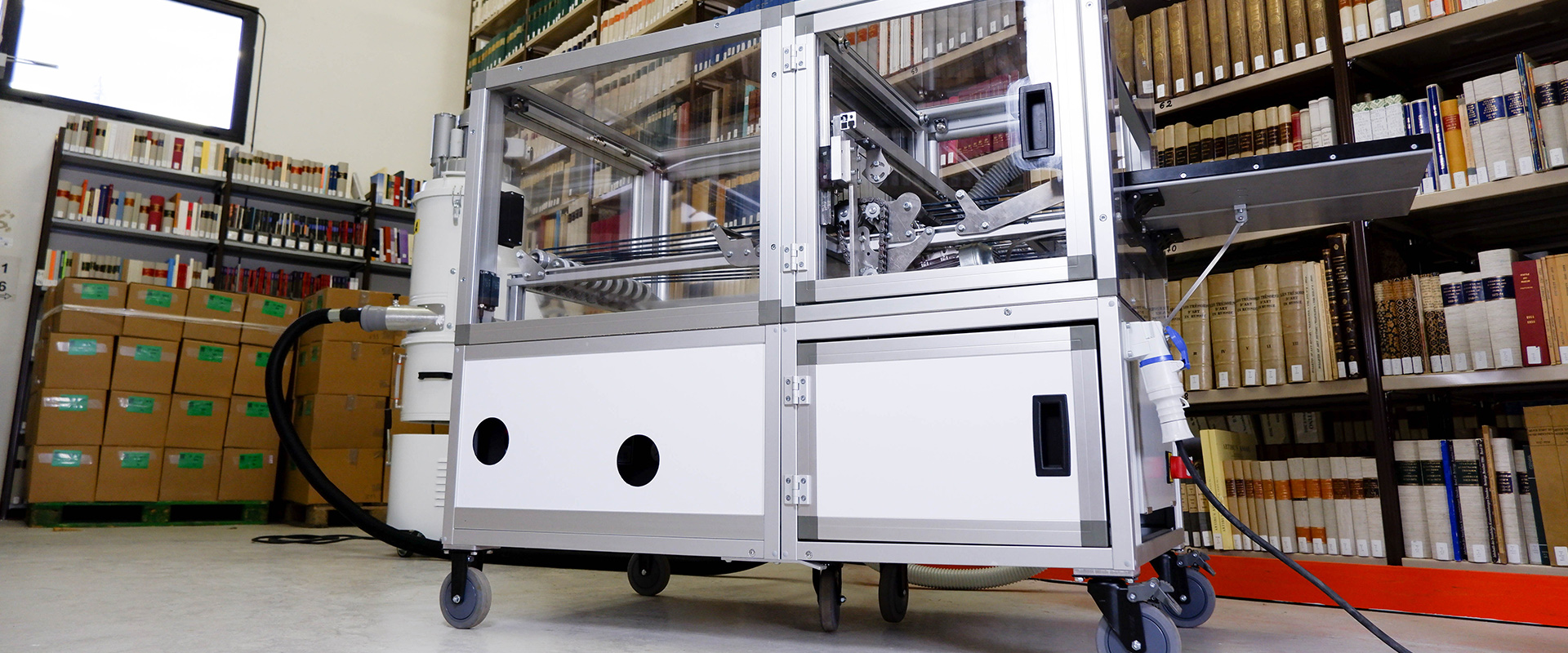
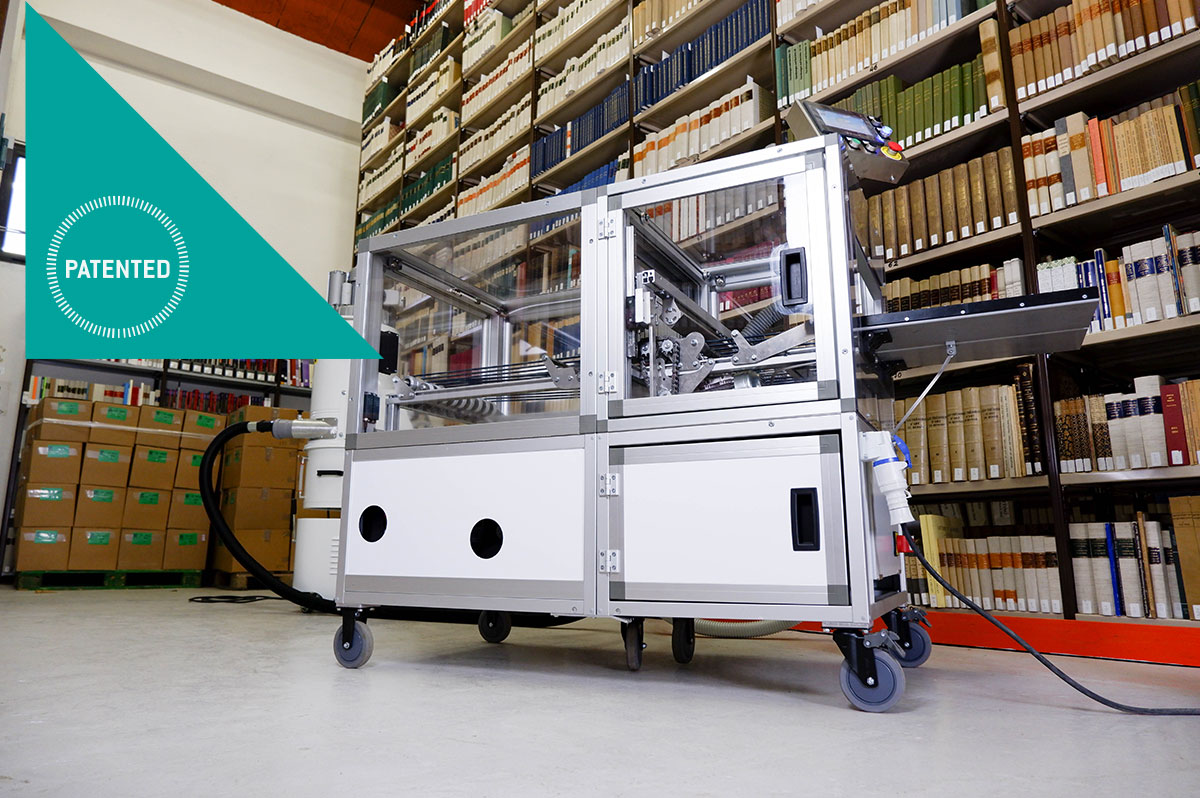
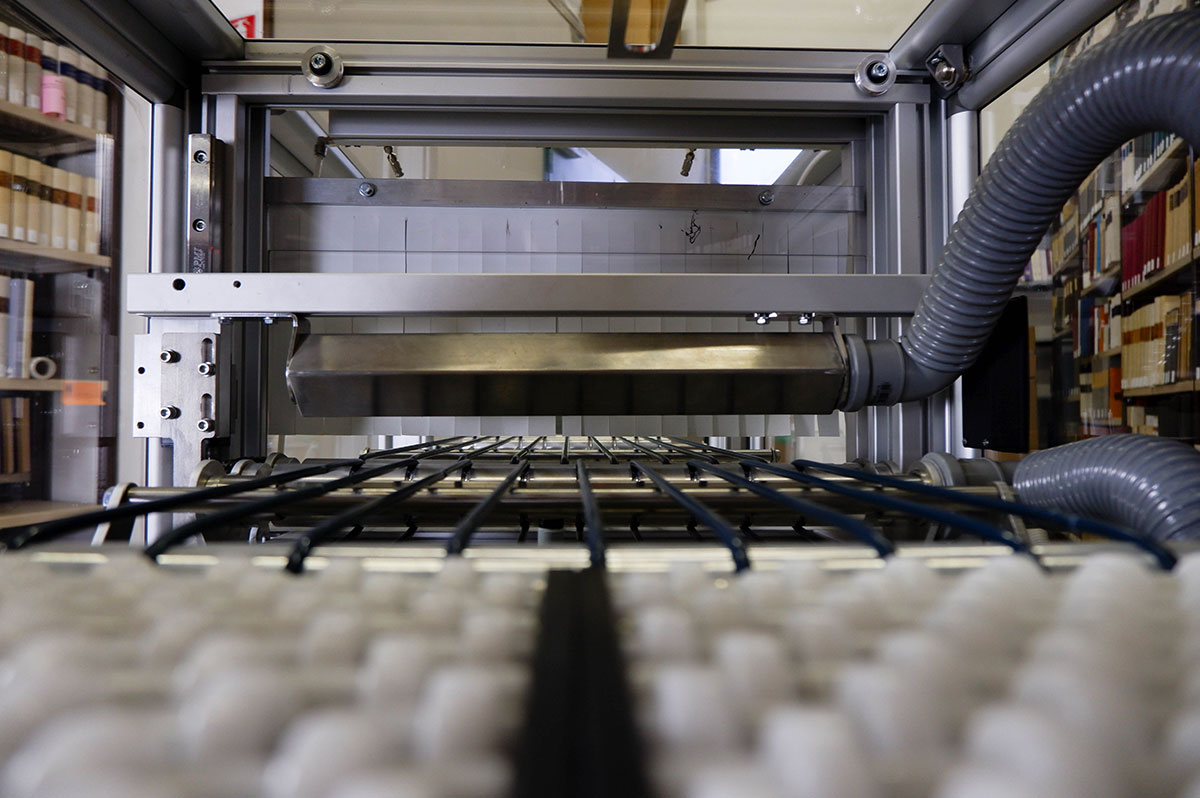
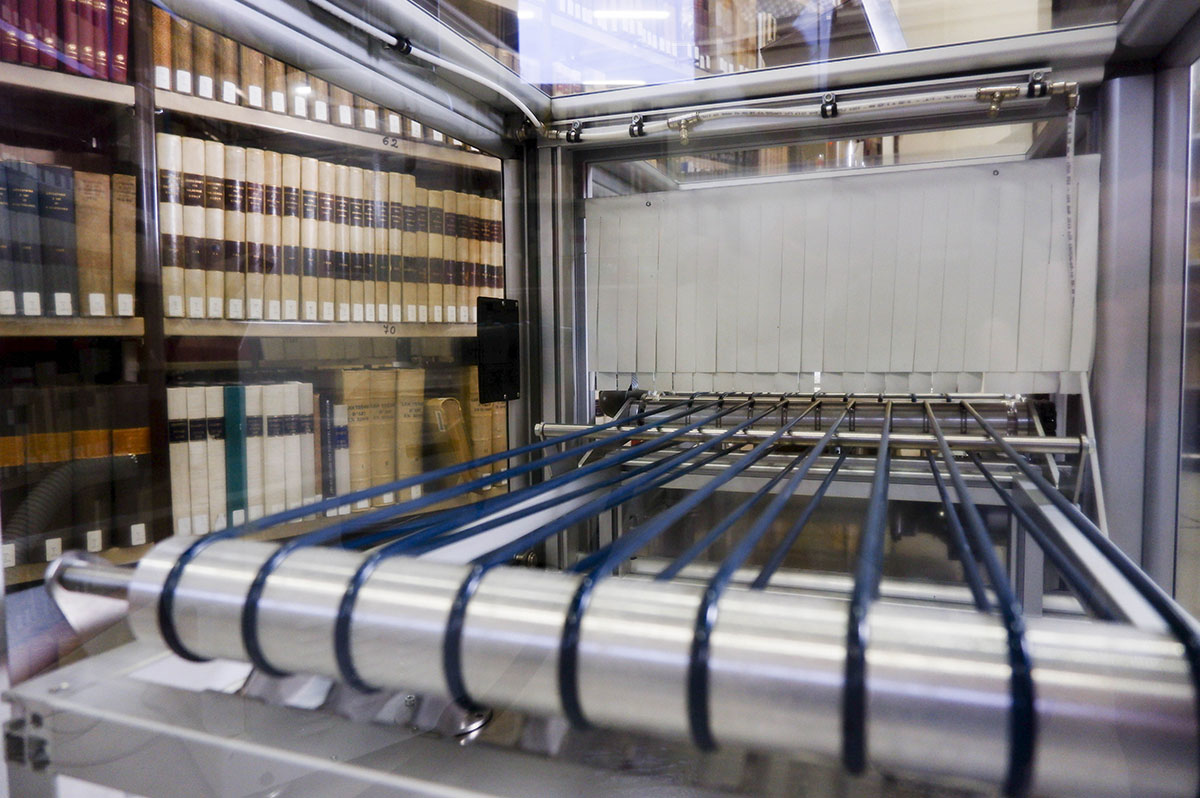
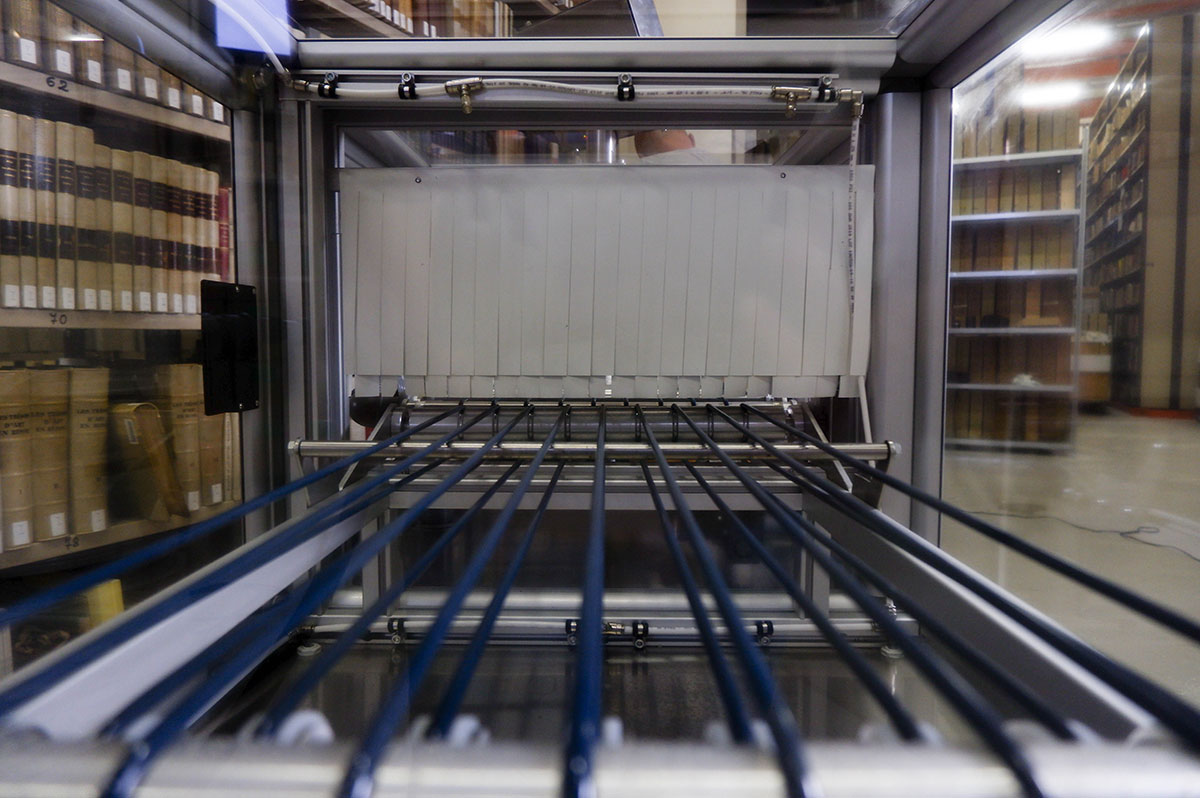
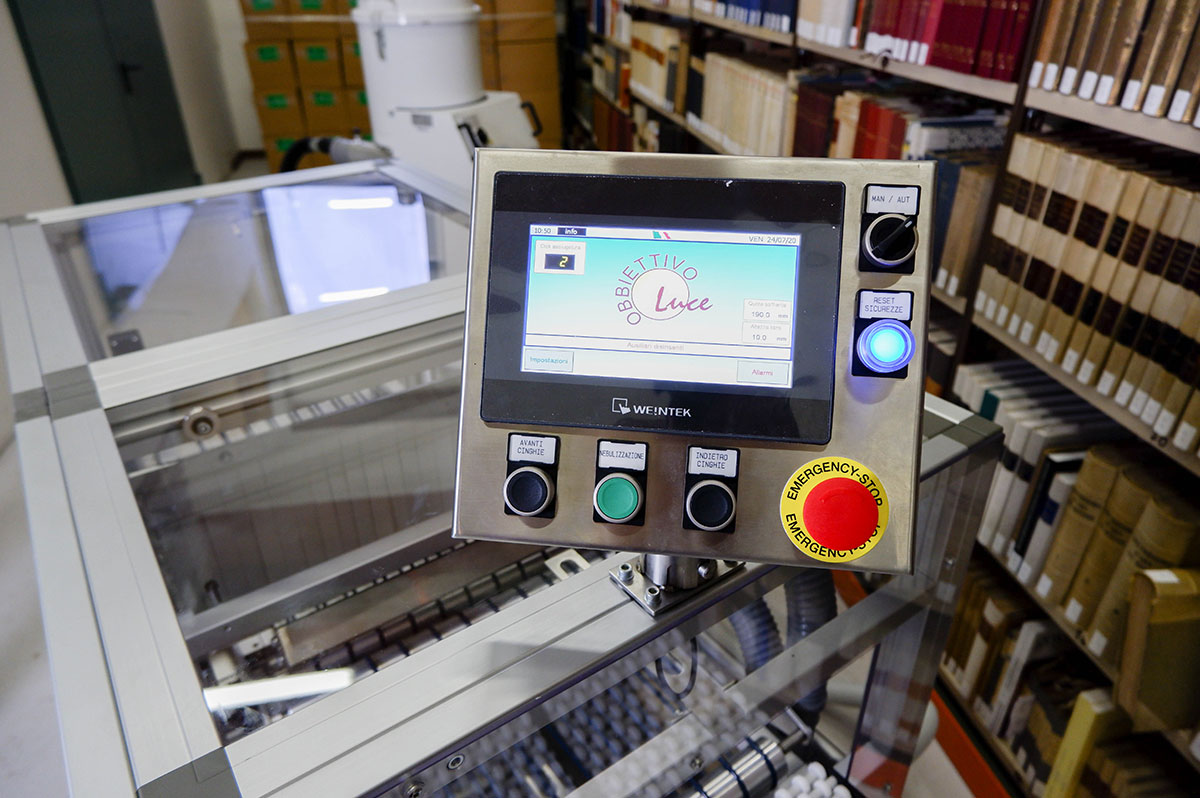
Nebula is an automatic machine for the disinfection of books, documents and paper materials, designed to eliminate microbiological agents after dusting. Through a controlled misting and drying process, it allows external surfaces to be treated evenly and safely, whilst protecting both the materials and the operators.
Features of Nebula®
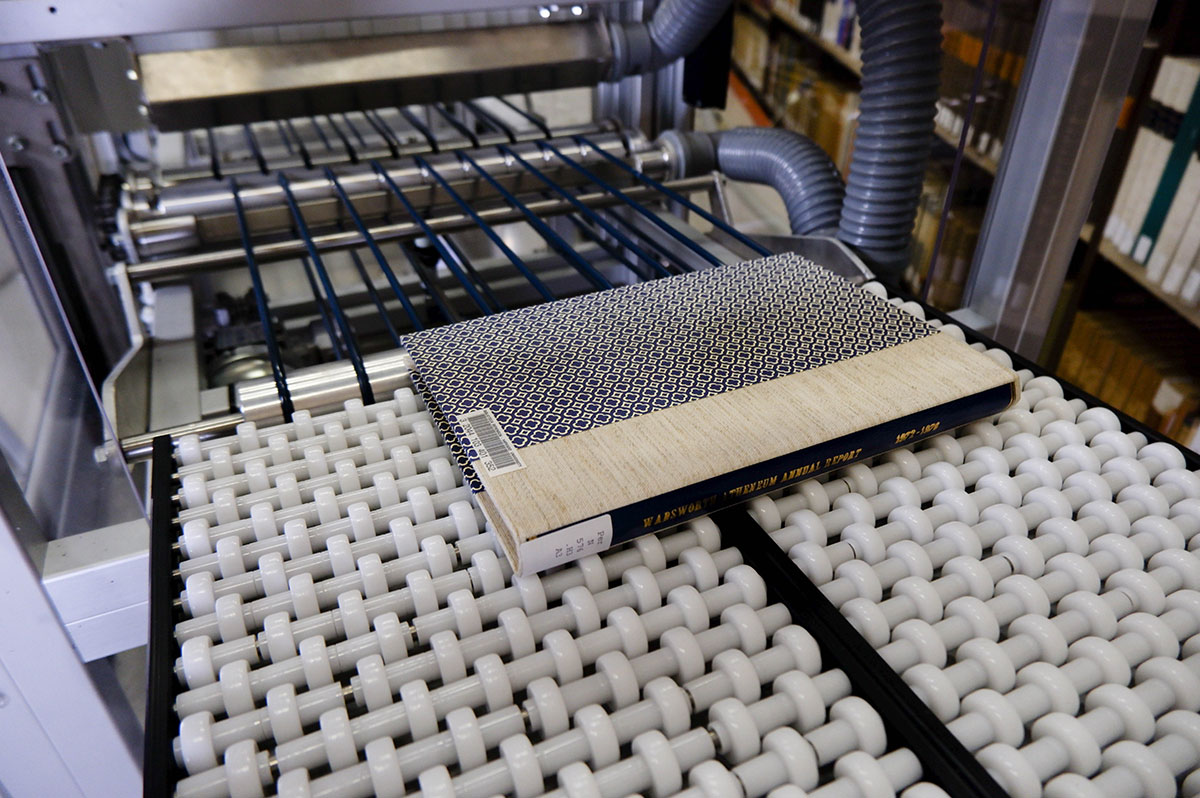
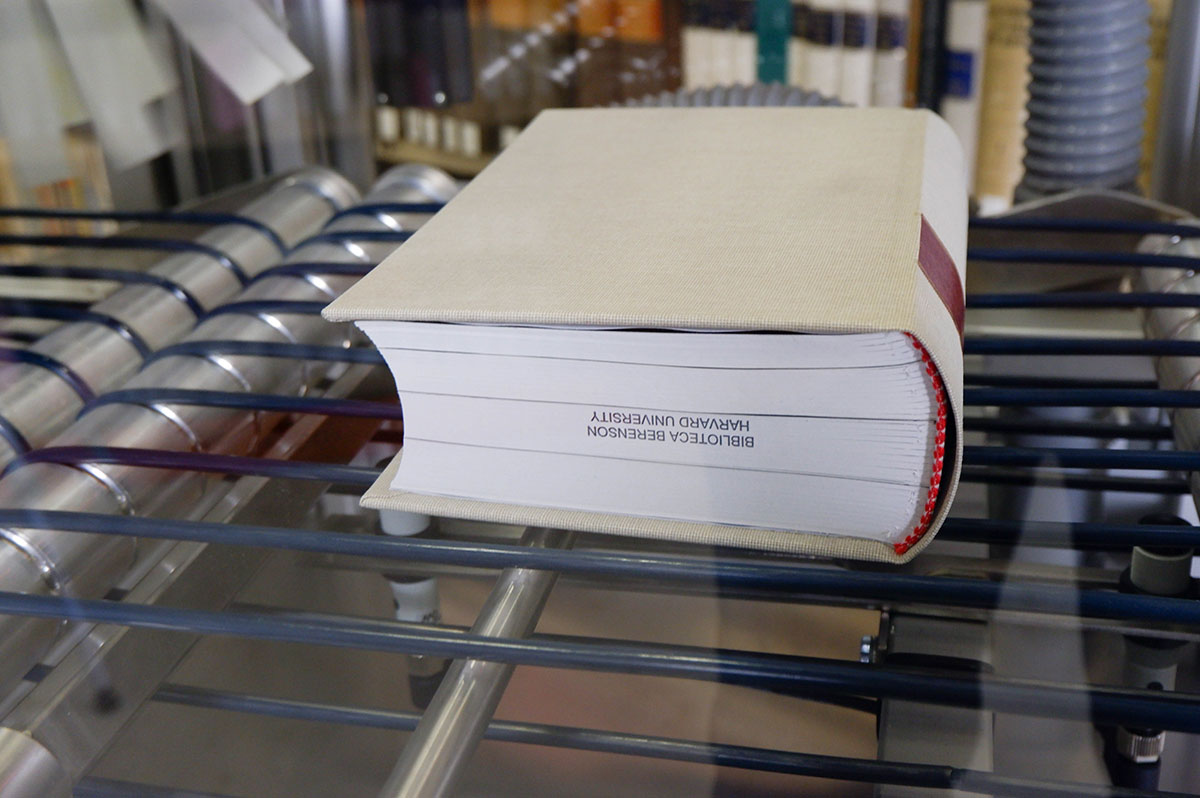
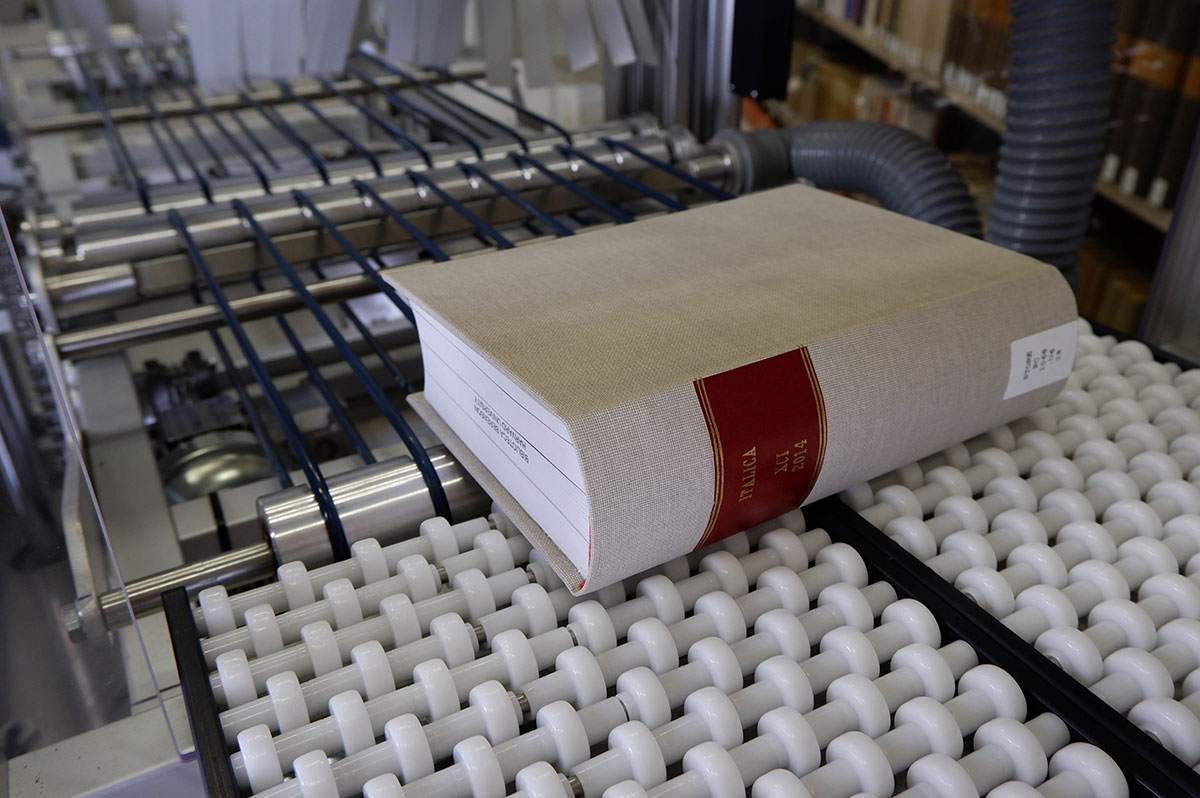
Key benefits of Nebula®
Safety for materials and operators
Nebulisation with quaternary salts and a closed system with filtered extraction.
Modular design
Structure separable into two units to facilitate transport and installation.
Nebula® technical specifications
Nebula is the system for the controlled disinfection of paper materials, integrating atomisation and drying technology into an automatic and safe process.
TECHNICAL DATA | |
|---|---|
Maximum book dimensions (W x D x H) | 600 x 440 x 180 mm |
Machine dimensions (W x D x H) | 750 x 1530 x 1230 mm |
Operating speed | up to 3 books/min |
Operating mode | automatic (2 stages) |
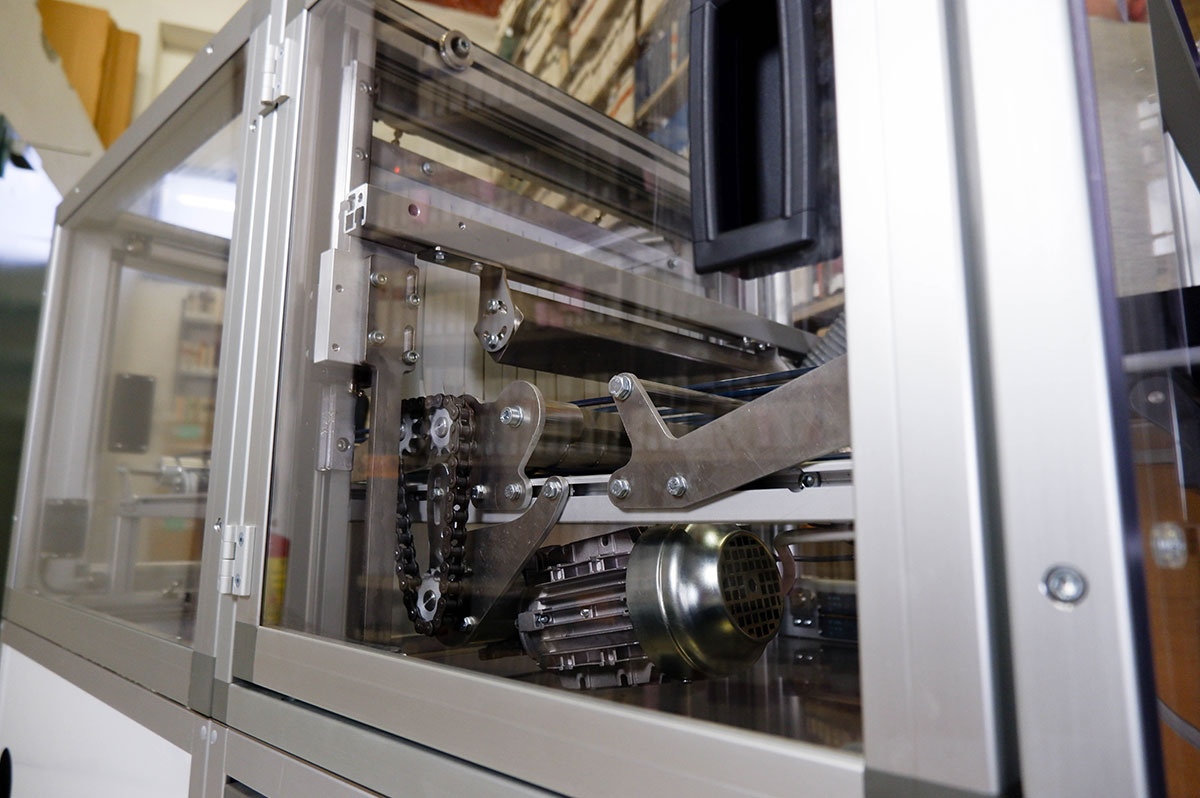
Process | spraying + drying (2 chambers) |
Disinfectant | quaternary ammonium compounds (QAC) in distilled water |
Safety system | extraction with HEPA filter for particle containment |
Structure | modular with wheels, separable for transport |
How Nebula Works
Nebula® operates through a two-phase process:
- Nebulization chamber: a controlled mist of disinfectant (quaternary ammonium compounds) is applied to the external surfaces of the material.
- Drying chamber: the item is dried through a calibrated airflow system, ensuring complete evaporation without leaving harmful residues.
The entire process is designed to ensure:
- uniform application
- controlled exposure
- operator safety
When to choose Nebula®’s controlled and scientific disinfection
The main disinfection methods applicable to paper materials include ethylene oxide, UV light and treatments based on quaternary salts. Nebula adopts the latter approach, using controlled nebulisation of quaternary salts in distilled water, selected for their effectiveness against bacteria, mould and viruses and for their compatibility with conservation practices.
Disinfection is necessary when dealing with biological contamination that cannot be managed by cleaning alone, and when a treatment that is repeatable and safe over time is required.
The need for reliable systems became clearly apparent during the SARS-CoV-2 health emergency, when it became necessary to disinfect materials after every use. Approaches based on controlled atomisation have demonstrated the ability to operate safely even on large volumes.
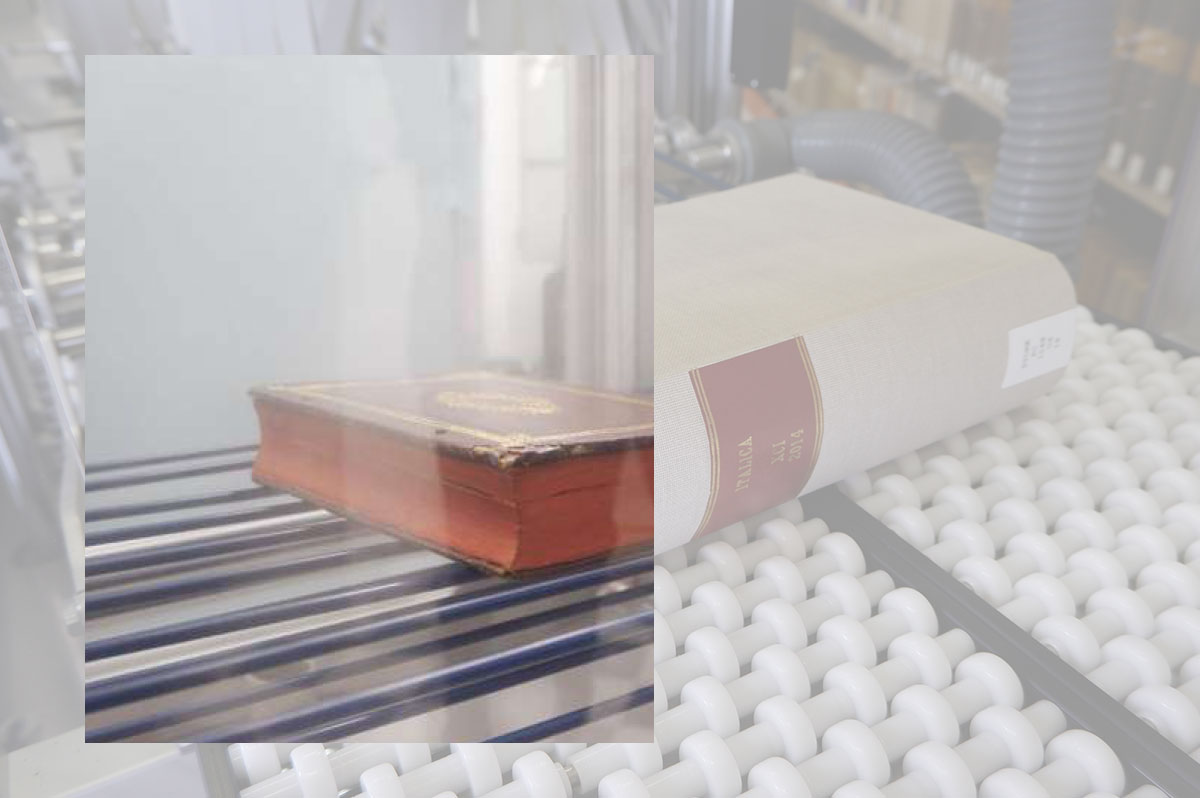
This type of treatment has also been applied in institutional settings, such as at the University Library of Genoa, where Nebula was used to disinfect manuscript collections affected by fungal infection. The treatment was validated through pre- and post-treatment microbiological analyses, which confirmed the elimination of spores and the absence of recurrence over time.